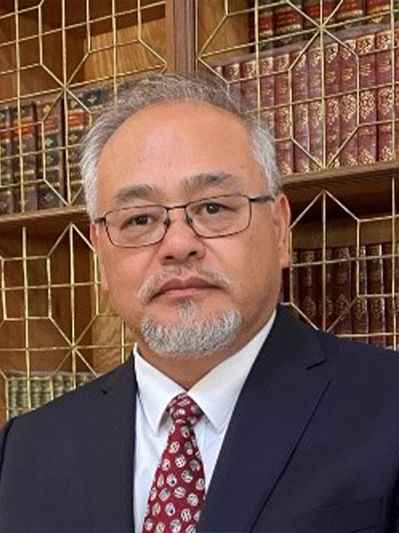
Prof. Bohua Sun Chinese Academy of Sciences, China |
Keynote Lecture: High-Entropy Structural Mechanics and Mechanical Metamaterials
Abstract: This report focuses on the field of high-entropy structural mechanics and mechanical metamaterials. Starting from the structural origin and thermodynamic entropy theory, it systematically elaborates on the core essence of the second law of thermodynamics (entropy increase law), the essential definition of high entropy, as well as the unique value and application potential of disordered structures in the field of mechanics, with a focus on in-depth discussion on the cutting-edge research progress of Einstein aperiodic tiling structures. Combined with typical bionic examples such as glass sponges, cuttlefish bones, ironclad beetles, and chainmail, the report systematically conducts research on the design, simulation and test of new mechanical metamaterials. Empirical studies have confirmed that compared with traditional ordered structures, disordered structures can endow materials with more excellent comprehensive mechanical properties. The research clarifies that high-entropy structures correspond to the disordered equilibrium state with maximum entropy, which has prominent mechanical properties such as high strength and high energy absorption; the research results not only have solid theoretical depth, but also broad engineering application prospects, providing important theoretical support and practical reference for the innovative development of mechanical metamaterials.
Biography: Prof. Bohua Sun is member of the Academy of Science of South Africa (elected in 2010) and Chair Professor at the Institute of Nano Energy and Nanosystems, Chinese Academy of Sciences. He obtained his PhD degree from Lanzhou University in 1989, under the supervision of Professor Ye Kaiyuan. He has previously engaged in research work at Tsinghua University, Delft University of Technology (the Netherlands), Ruhr University Bochum (Germany, as an Alexander von Humboldt Fellow), University of Cape Town (South Africa), Jinan University (serving as the founding Dean of the International College), and Xi'an University of Architecture and Technology (serving as the Dean of the Institute of Mechanics and Technology, IMT). Before returning to China, he held the position of Tenured Professor in the Department of Mechanical Engineering at Cape Peninsula University of Technology (South Africa).
He has authored and edited works including *Dimensional Analysis and Lie Groups* and *Toroidal Shells*, and translated *The Biography of Ludwig Prandtl*. His representative achievements are as follows: 1. Successfully solved the unsteady laminar boundary layer problem proposed by L. Prandtl in 1904 by introducing similarity transformations, and obtained for the first time an exact solution expressed by Kummer functions for planar flow; 2. Proposed two generalized Kepler's laws of periodicity for three-body and multi-body systems in Newtonian gravitational fields (dubbed the "Sun Bohua Conjecture" by Belgian physicist Claude Semay); 3. Obtained for the first time the exact solution for axisymmetric bending of toroidal shells expressed by Heun functions; 4. Addressed Qian Weichang's doubts about Hu Haichang's generalized variational principle using thermodynamic theory; 5. Derived for the first time the universal scaling law that the propagation speed of the domino effect is proportional to the 1/2 power of the domino spacing using directional dimensional analysis; 6. Obtained for the first time the universal scaling laws via dimensional analysis, which state that the aerodynamic drag of dandelion seeds is proportional to the -2/3 power of the Reynolds number and the terminal velocity is proportional to the 3/4 power of the weight (mg); 7. Proposed a bionic lattice structure inspired by glass sponges, with mechanical properties surpassing those of natural materials. Two of his achievements have been reported in *National Science Review*, and have also been featured in special articles by *Science China (Series A: Mathematics, Physics, Astronomy)* and *Chinese Physics B* respectively. In 2010, he was selected as an Outstanding Alumnus of the Postdoctoral Program at Tsinghua University and one of the "Top 10 News Figures of the Global Chinese Community" in the same year. Currently, he also holds concurrent positions including Extraordinary Professor at Stellenbosch University (South Africa), Member of the Editorial Board of *Acta Mechanica Sinica*, Chief Editor of the book series *Frontiers of Mechanical Fundamentals and Engineering Technology* published by Higher Education Press, Advisor to the Editorial Board of the journal *Physics of Fluids*, and Director of the Academic Committee of the Jiangsu Applied Mechanics Center (China University of Mining and Technology).
|
|
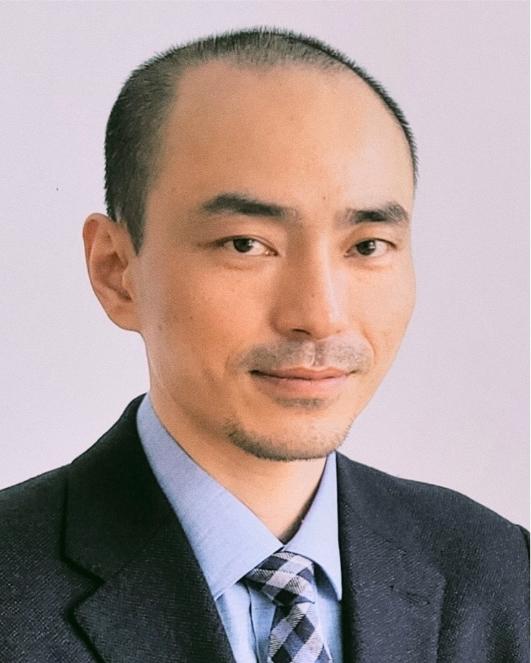
Prof. Lihua Shao Beihang University, China |
Keynote Lecture: Electromechanical Coupling Properties of Natural Porous Materials and Biomimetic Research
Abstract: The development of eco-friendly electromechanical devices is a frontier research direction. While natural porous materials like wood exhibit electromechanical coupling, their intrinsic mechanisms remain insufficiently quantified. This report investigates the electromechanical performance of wood sponge through multiscale modeling and experiments. We demonstrate that their electromechanical response is dominated by the flexoelectric effect induced by microstructural ligament bending, rather than intrinsic piezoelectricity. Guided by this mechanism, we fabricated a biomimetic porous PDMS with a current-strain sensitivity 1,600 times that of solid PDMS. Benefiting from the biomimetic design, even with large ligaments, its current-strain sensitivity and equivalent piezoelectric coefficient are 5 and 11 times those of random porous PDMS, respectively, maintaining excellent stability after 50,000 cycles. These properties enable applications in lightweight, self-powered impact monitoring. Furthermore, to achieve biomimetic inverse design for improved performance, we developed a integrated framework that combines machine learning and genetic algorithms, with staggered composites selected as a case study. An Artificial Neural Network (ANN) model was embedded into the genetic algorithm, where the model was trained using a mechanical property database constructed via finite element analysis. This system enables efficient screening of structural configurations to match target stress-strain curves, and the mechanical properties of the designed structures exhibit excellent agreement with the target values. This study not only provides a precise tool for composite material design but also offers a generalizable strategy for customizing advanced functional materials.
Biography: Prof. Dr.-Ing Li-Hua Shao is currently a full Professor of School of Aeronautic Science and Engineering of Beihang University, China. Her research interests include the theory and methodology of multi-field coupling mechanics and intelligent materials & structural mechanics in solid mechanics, as well as applied fundamental research on high-performance electromechanical sensing and energy harvesting. Shao’s research work has been published in journals including J. Mech. Phys. Solids, PNAS, Sci. Adv., Int. J. Impact Eng., Adv. Funct. Mater., etc. She received the 1st Chou Pei-yuan Young Investigator Award in Mechanics of Chinese Society of Theoretical and Applied Mechanics (CSTAM), Natural Science Fund for distinguished young scholars of Beijing Municipal, National Xu Zhilun Excellent Teacher Award in Mechanics. She serves as a junior editorial advisory board member of Engineering Fracture Mechanics, and Associate Secretary General and Vice Chair of the Working Committee of Female Scientists of CSTAM.
|
|
Prof. Ji Zhang Foshan University, China |
Keynote Lecture: Bridging Eras: Integrating Historic Wisdom with Contemporary Innovation in Preplaced Aggregate Concrete Technology
Abstract: The classic two-stage casting method of Preplaced Aggregate Concrete (PAC) offers inherent advantages, including superior impermeability, reduced shrinkage, and the unique ability to be placed in complex or water-submerged settings where traditional vibration is impossible. This talk investigates pathways to revive and advance this material by integrating contemporary innovations in sustainable binders, fiber reinforcement, and data-driven design.
Portland limestone cement (PLC), combined with industrial by-products like fly ash and silica fume, is explored to formulate low-carbon grout matrices. The potential of agricultural waste materials, such as date palm ash, as effective supplementary cementitious components is also examined. To enhance mechanical performance, discrete fibers including steel, polypropylene, and glass are incorporated, leading to the development of Fiber-Reinforced PAC (FR-PAC) with improved toughness. To navigate the complex design space introduced by these material combinations, a data-driven predictive framework is established. A multi-target stacked ensemble machine learning model is developed to predict the key mechanical properties of FR-PAC based on its mixture proportions. This model serves as a tool for performance estimation and mixture analysis. This integrated approach connects the historical principle of PAC—its pre-placed aggregate skeleton—with contemporary advancements in sustainable materials and computational methods. The findings outline a pathway to revive PAC as a more sustainable, tunable, and intelligently designed material system for modern construction applications.
Biography: Prof. Ji Zhang is Distinguished Professor at Foshan University, academic Leader in Civil Engineering Materials, and head of the Computational Mechanics and Structural Simulation Team. He earned his academic degrees from Tongji University, the Institute of Mechanics of the Chinese Academy of Sciences, and Huazhong University of Science and Technology. He was a visiting scholar at the University of California, Los Angeles, and UC Berkeley, and has taught at Tongji University and Huazhong University of Science and Technology.
With many years of dedicated research, his work spans the mechanical and multi-field coupling behaviors of concrete and bone fossils: He has clarified the mesoscopic mechanisms of the plastic free energy concept in concrete damage mechanics, proposed a novel decomposition method for stress tensor, and established the first 3D elastoplastic damage constitutive model that comprehensively reflects the unilateral effect and triaxial confinement effect of concrete, which was further extended to large deformations. This original model has been extensively adopted and further developed by international peers. It was observed for the first time that loading confined concrete to its ultimate bearing capacity at an ultra-early age can, counterintuitively, enhance its long-term performance upon maturation. He has attempted to explain this phenomenon using the theory of pre-packed aggregate concrete and has subsequently developed engineering applications for ultra-early-age loaded confined concrete members. Furthermore, by reconstructing the rich mesoscopic geometric information of trabecular bone preserved in fossils, he has conducted large-scale finite element simulations at the meso-scale. This interdisciplinary research assists paleontologists in making more compelling and quantitative inferences about the locomotion and physiology of prehistoric creatures, with related findings published in the journal Science. In recent years, he has focused on developing pre-packed aggregate concrete to reduce cement consumption and has explored using the agricultural by-product, date palm ash, as supplementary cementitious materials.
|
 |
 |
 |
 |
Speaker 1Prof.Raj Das RMIT University, Australia |
Speaker 2Prof. Rachid bennacer School Ecole Normale Superieure (Cachan), France |
Speaker 3Prof. Ziad MOUMNI ENSTA ParisTech, France |
Speaker 4Prof. Joseph ZARKA École Polytechnique, France |
 |
 |
 |
 |
Speaker 5Prof. Stefan Dimov University of Birmingham, UK |
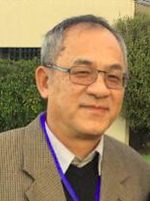
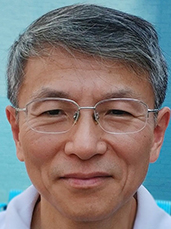
Speaker 6Prof. Hamid Assadi Brunel University London, UK |
Speaker 7Prof. Zhan Wen Chen Auckland University of Technology, New Zealand |
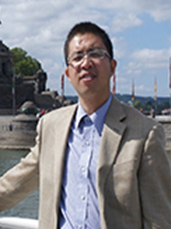
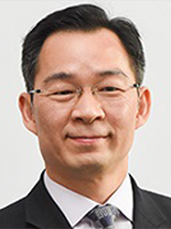
Speaker 8Prof. Weimin Huang Nanyang Technological University, Singapore |
 |
 |
 |
 |
Speaker 9Prof. Ruxu Du The Zhongke Jianchi Biotechnology Co., Ltd, China |
Speaker 10Prof. Zhengwei You Donghua University, China |
Speaker 11Prof. Alan Kin Tak Lau Swinburne University of Technology, Australia |
Speaker 12Prof. Zhong Chen Nanyang Technological University, Singapore |
 |
 |
 |
 |
Speaker 13Prof. LAU, Gih Keong National Yang Ming Chiao Tung University, Taiwan, China |
Speaker 14Prof. Michael Wang Great Bay University, China |
Speaker 15Prof. Wei Gao University of New South Wales (UNSW), Australia |
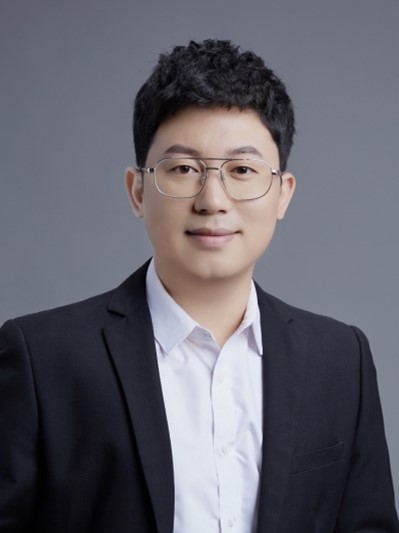
Speaker 16Prof. Jinbo WU Shenzhen MSU-BIT University, China |
 |
 |
||
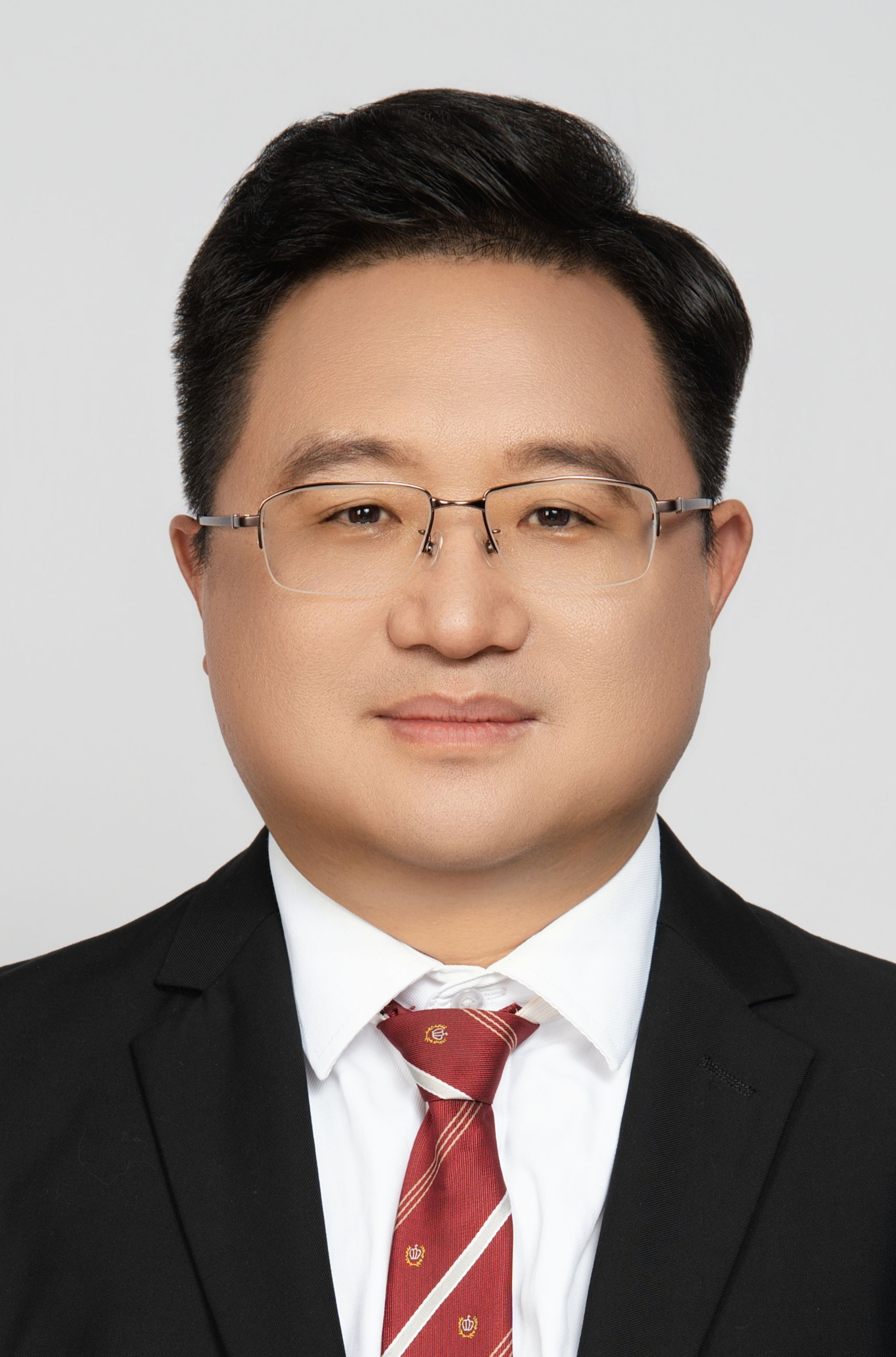
Speaker 17Assoc. Prof. Junye Cheng Shenzhen MSU-BIT University, China |
Speaker 18Prof. Huafeng Ding.jpg China University of Geosciences (Wuhan), China |
|
|
Speaker 1Prof.Raj Das RMIT University, Australia |
Speaker 2Prof. Rachid bennacer School Ecole Normale Superieure (Cachan), France |
|
|
Speaker 3Prof. Ziad MOUMNI ENSTA ParisTech, France |
Speaker 4Prof. Joseph ZARKA Prof. Joseph ZARKA |
|
|
Speaker 5Prof. Stefan Dimov University of Birmingham, UK |
Speaker 6Prof. Hamid Assadi Brunel University London, UK |
|
|
Speaker 7Prof. Zhan Wen Chen Auckland University of Technology, New Zealand |
Speaker 8Prof. Weimin Huang Nanyang Technological University, Singapore |
| |
|
Speaker 9Prof. Ruxu Du The Zhongke Jianchi Biotechnology Co., Ltd, China |
Speaker 10Prof. Zhengwei You Donghua University, China |
|
|
Speaker 11Prof. Alan Kin Tak Lau Swinburne University of Technology, Australia |
Speaker 12Prof. Zhong Chen Nanyang Technological University, Singapore |
|
|
Speaker 13Prof. LAU, Gih Keong National Yang Ming Chiao Tung University, Taiwan, China |
Speaker 14Prof. Michael Wang Great Bay University, China |
|
|
Speaker 15Prof. Wei Gao University of New South Wales (UNSW), Australia |
Speaker 16Prof. Jinbo WU Shenzhen MSU-BIT University, China |
|
|
Speaker 17Assoc. Prof. Junye Cheng Shenzhen MSU-BIT University, China |